
This E-Paper PDA Wants You to Ditch Your Smartphone for a Keyboard and Two Tiny Screens
Every few months (or years, depending upon how old you are), there is a new “anti-smartphone” device that comes with a physical keyboard and a tiny screen and focuses on doing one thing well.
Freewrite did it for writers. PicoCalc did it for tinkerers. Now Talisman Design, an independent hardware studio out of Phoenix, Arizona, wants a shot at it with PocketMage, a pocketable personal digital assistant that just launched on Crowd Supply.
PocketMage Key Specifications
Let’s take a look at the hardware:
- Chip: ESP32-S3 with Wi-Fi and Bluetooth
- RAM: 2 MB QSPI PSRAM
- Displays: 3.1-inch e-paper (320×240) + 1.8-inch OLED (256×32)
- OS: PocketMageOS, custom, open source, built on FreeRTOS
- Storage: 16 MB QSPI flash and MicroSD card slot
- Battery: 1200mAh LiPo, rated for about 7 days
- User Input: Built-in tactile QWERTY keyboard, USB keybord support and touch scrollbar on main screen
- Expansion: FPC port with I2C, SPI, UART, GPIO and power
- Dimensions: 100 x 73 x 21.7 mm
- Shipping: expected by the end of March 2027
I find the dual-display setup interesting in this tiny device. There is the main 3.1-inch e-paper panel display and then there is a secondary, 1.8-inch OLED strip for menus and anything that needs a fast refresh. Somewhat like those touchbars in MacBooks except that it’s display only.
That’s deliberate because although e-paper is sunlight-readable and power-friendly, it’s too slow for scrolling menus and hence the secondary OLED display.
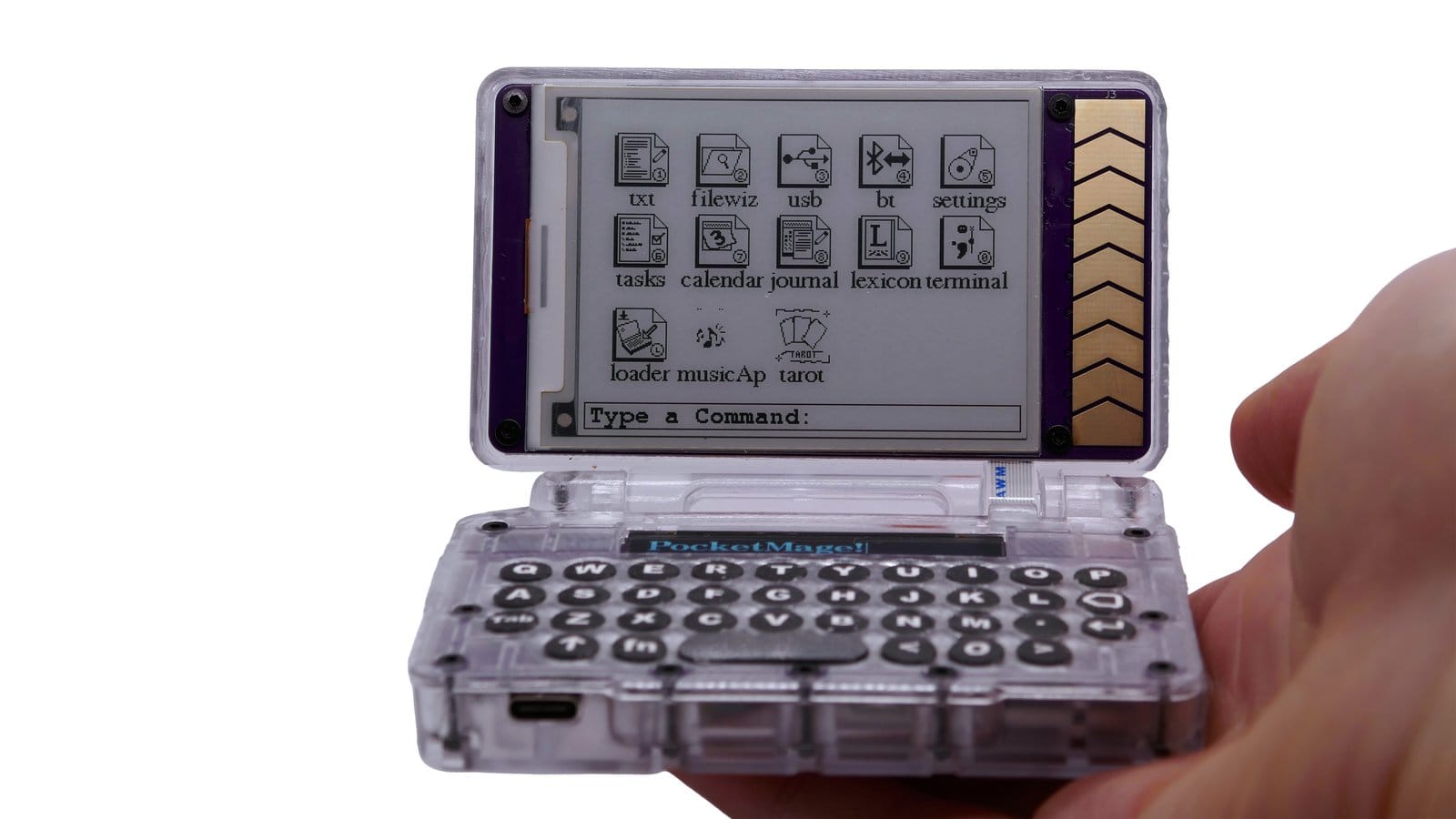
Underneath all that is an ESP32-S3, which may feel like an unusual choice for something marketed as a PDA. It’s a microcontroller, not the kind of chip you’d find running a full desktop OS, but that’s sort of the point.
ESP32 boards have gained a massive hobbyist ecosystem of late, which means PocketMage keeps the whole thing low-power enough to hit that 7-day battery estimate.
A DIY kind of gadget should allow tinkerers some tinkering room. PocketMage doesn’t disappoint. It has an FPC expansion port with I2C, SPI, UART, and GPIO for anyone who wants to bolt on their own hardware and thus showing off your engineering skills more than your writing skills.
At the core: PocketMageOS and the Bazaar
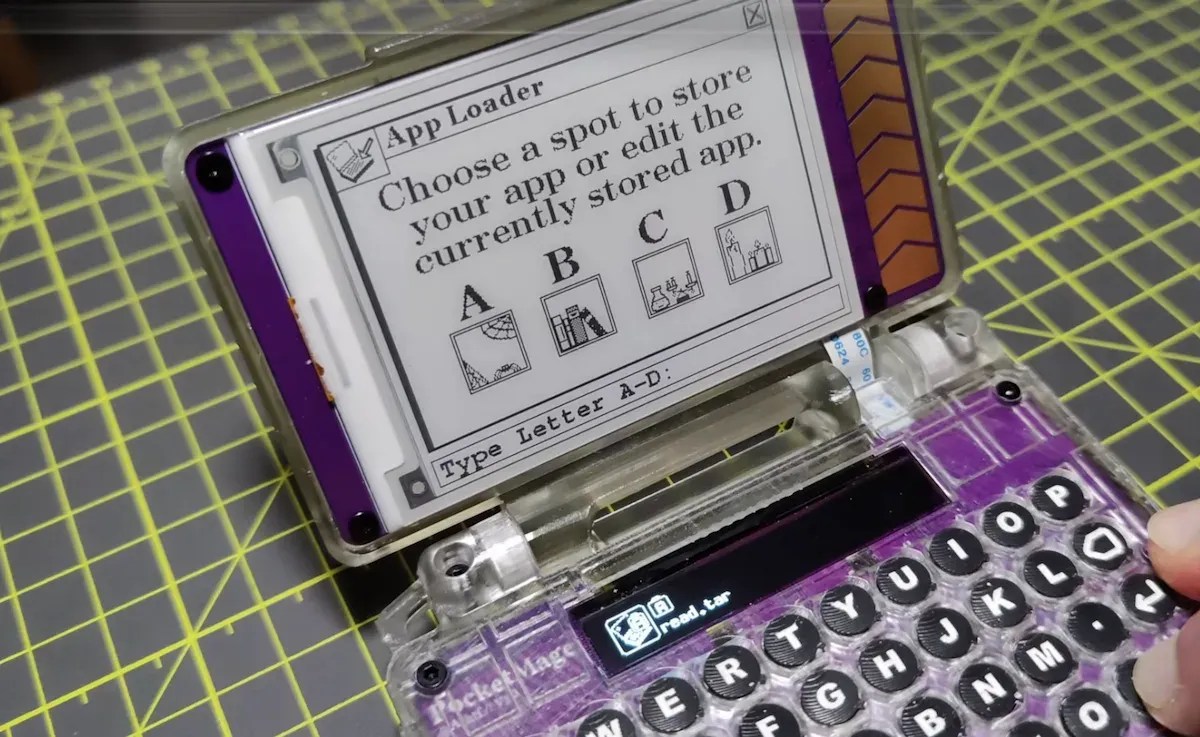
PocketMage doesn’t run Linux. It runs PocketMageOS, a custom, “wizard-inspired” operating system built on FreeRTOS, with a built-in suite that includes a Markdown text editor, a dictionary, a journaling app, and a terminal.
Third-party apps get distributed through something called the Bazaar, essentially an app store for sideloaded software. I can already see a calculator, a text-based web browser, an e-book reader, a Pomodor timer and, a bit oddly, a Tarot card reader among the available apps.
Back PocketMage on Crowd Supply
PocketMage is live on Crowd Supply now, and at the time of writing this article has raised $66,538 of its $100,000 goal from 204 backers, with 58 days left to go.
The DIY kit is $185 and the pre-assembled version is $235, both with free US shipping and a flat $12 for international orders. Both come in Parchment or Royal Purple. Backers should expect deliveries to start by the end of March 2027.
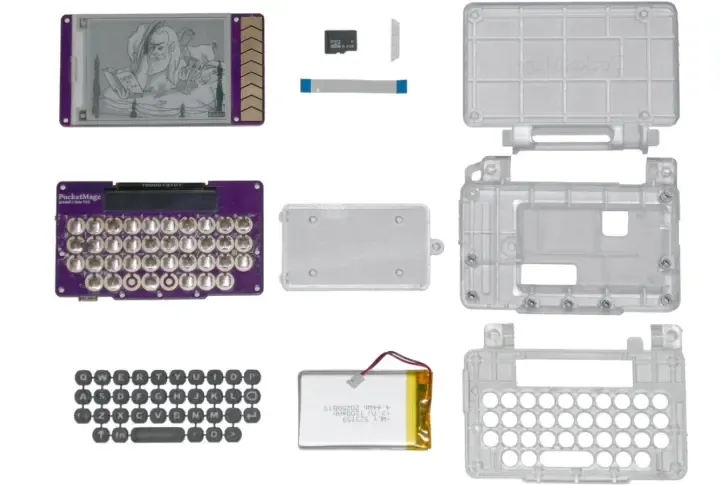
If you’re comfortable with the idea of assembling it yourself and want to save $50, the DIY kit gets you the exact same hardware as the assembled version. You only need screwdrivers to assemble it. No soldering required. If you’d rather skip the build entirely, the $235 tier is the way to go.
The pricing may seem steep at first. But if you look at the alternatives, PicoCalc is cheaper at $89 but doesn’t include a battery and only lasts 16 hours on a charge, the Freewrite Traveler costs $549 for a writing-only device with no expansion port, and the GPD MicroPC 2 is $680 and not really pocketable at all.
At $185 to $235, PocketMage isn’t the cheapest option in this space, but it’s not the priciest either, and it’s the only one on that list that’s fully open on both hardware and software.
Do You Need This or Do You Want This?
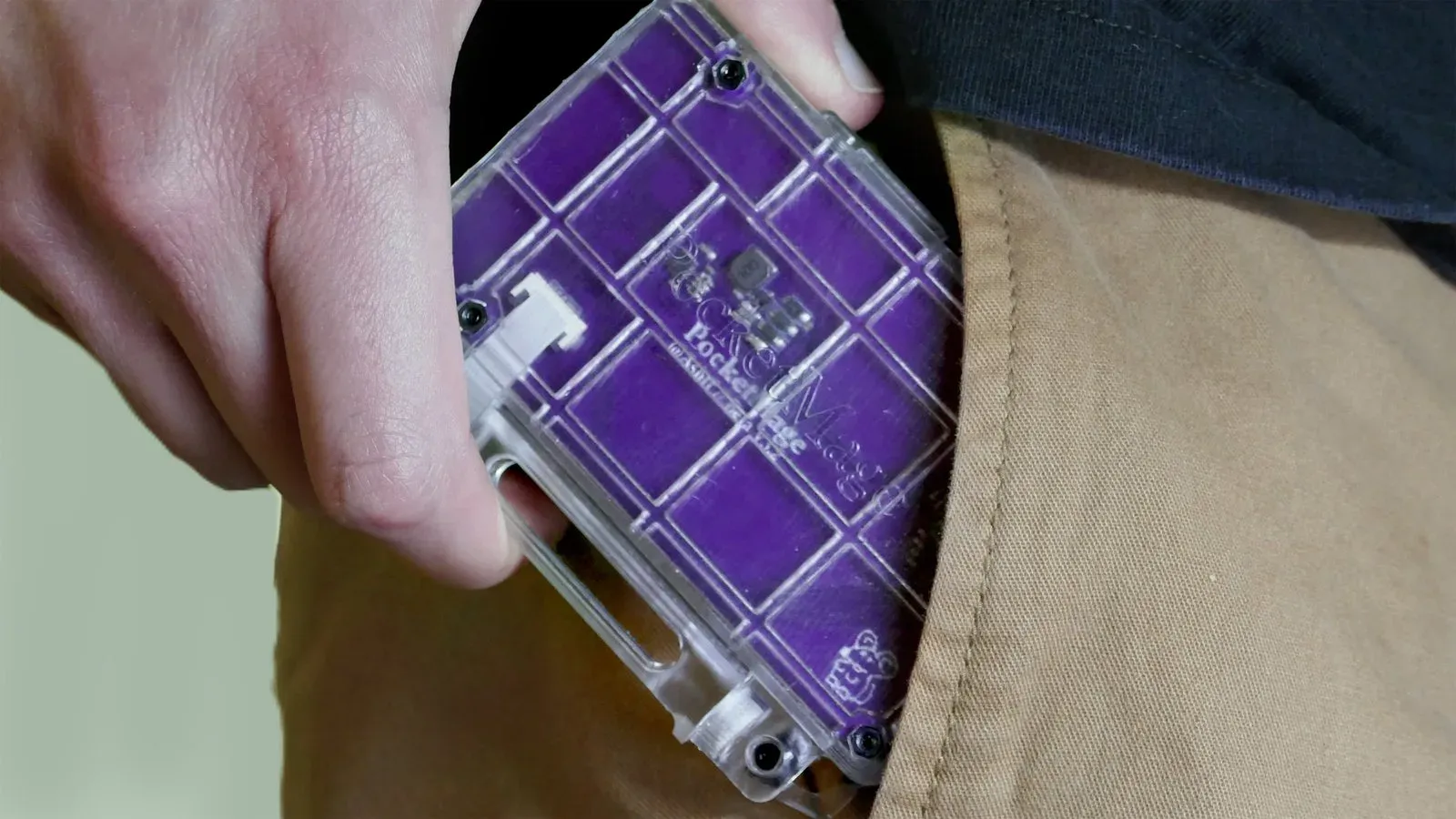
Here’s the thing, though. Your phone is already in your pocket, already has a keyboard, and already does everything PocketMage does. That’s the harsh truth.
I can’t speak for you, but personally, I doubt if I can use PocketMage for any serious work. But the child inside me would want this just for fun.
That tiny cyberdeck feel takes you straight back to the 80s when something like this could have been the talk of the town, the envy of your peers.
And these tiny devices have their own niche market. No wonder that we have several handheld Raspberry Pi devices and Linux computers.
It’s not a need, it’s a want, aimed primarily at hobbyists, cyberdeck builders, and people nostalgic for a Palm Pilot they never quite got over.
Would you buy a PocketMage? Share your answer in the comments please.
