
Proxmox Virtual Environment Officially Runs on ARM64, But Your Raspberry Pi Isn’t Supported Yet
Virtualization is basically load-bearing infrastructure for any serious data center in 2026. Enterprises lean on it to run more workloads on less hardware, isolate services cleanly, and keep uptime high without buying a rack of extra servers.
Proxmox has built a name for itself in this space over the years with its range of products.
Proxmox Virtual Environment (VE) handles virtualization, Proxmox Backup Server covers data protection, and Proxmox Datacenter Manager ties it all together as a solution for managing distributed infrastructure.
All of it ships as open source software too! 🤌
Now, they have announced a major development for Proxmox VE, their flagship virtualization platform.
Proxmox VE on ARM64
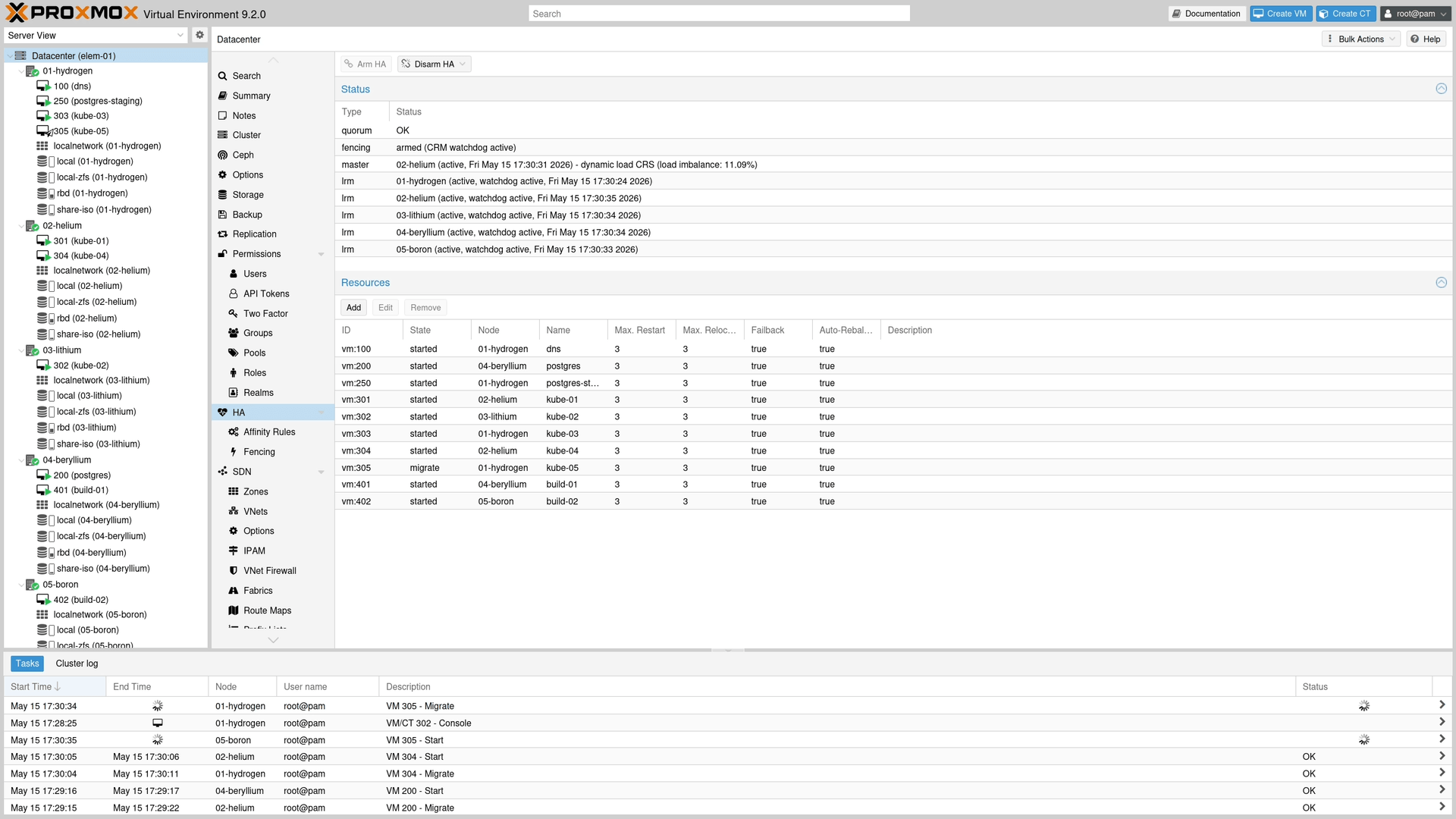
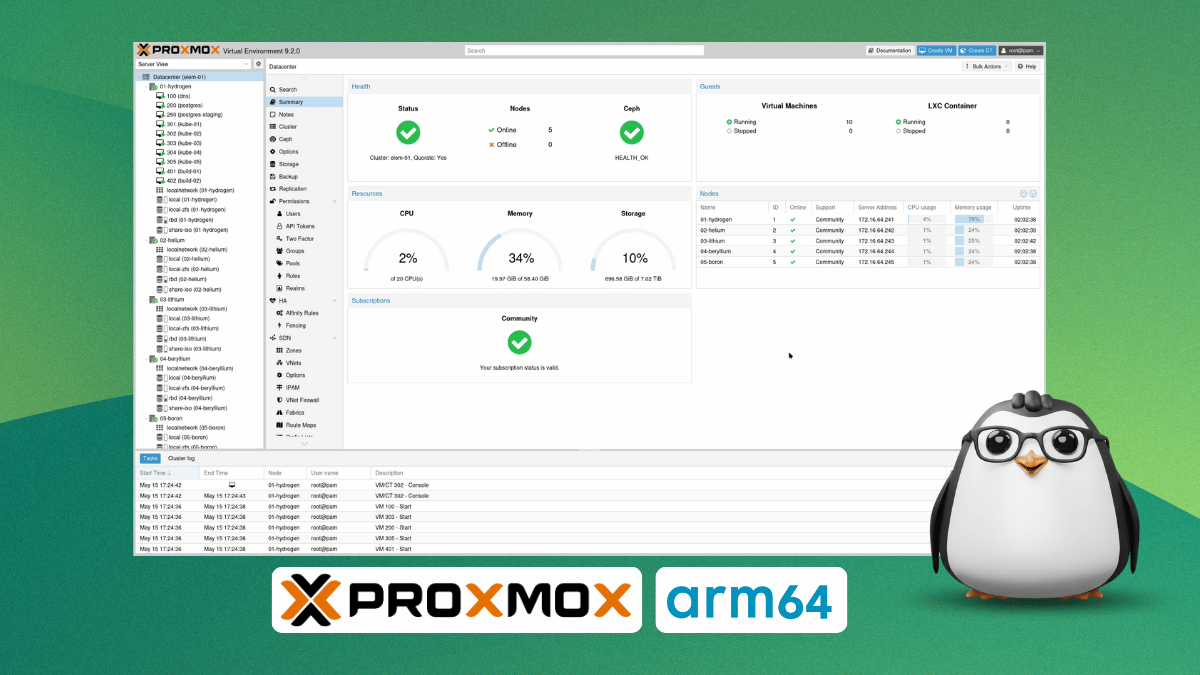
Yep, that’s the highlight move. Sitting alongside its existing x86-64 builds are the new ARM64 images that have brought official support for the Arm platform.
Proxmox says the new images follow the same codebase, release lifecycle, and support window as x86-64, while running on Debian 13.5 “Trixie” with Linux kernel 7.0 and additional components like QEMU 11.0, LXC 7.0, and ZFS 2.4.
Likewise, storage gets similar improvements with ZFS 2.4 and Ceph, two of Proxmox VE’s core storage options, carrying full feature parity with the x86-64 build.
Though you should know that officially supported hardware is currently limited to the NVIDIA Grace and Vera platforms. Proxmox has also validated the Arm64 build jointly with NVIDIA and Supermicro, testing specifically on Grace Hopper Superchip servers.
Other UEFI-based ARMv9-A hardware gets best-effort support, and Proxmox says ARMv8-A “generally works too.” What’s not supported is that Raspberry Pi lying on your desk, or really any other devicetree-only single-board computer, like an Orange Pi or a Radxa ROCK board.
Don’t think that ARM64 support is stopping at Proxmox VE; the developers are already running internal test builds for their other offerings, with Proxmox Backup Server being one of the examples given.
However, which one gets prioritized depends on their enterprise customers’ needs.
Get started
Seeing that ARM64 as a platform has matured so well along the years, and more and more workloads have shifted to this over x86-64, this move doesn’t really come as a big surprise to me.
Proxmox didn’t ship this as an experiment either. It launched this with full support from day one. This, to me, is a company that saw where the market was headed and adapted accordingly.
Anyhow, Proxmox VE for ARM64 is available now as a free download, either as a bare-metal ISO image or through package repositories alongside the existing x86-64 builds.
Enterprise users get access to the pve-enterprise repository too, same as on x86-64, with Proxmox recommending it for production deployments.
You can grab the Arm64 ISO installer directly, dig into the documentation for setup details, or browse the source code repositories if you want to see what’s under the hood.
Suggested Read 📖: Our informative mini-course that covers everything from installing and upgrading Proxmox to using it.
