
KaOS Releases First Dinit-Based ISO, but It’s Not Ditching Systemd Entirely
We are used to seeing systemd as the default init on most Linux distributions, but not everyone is a fan.
Some users and developers take issue with its broad scope, preferring init systems that do one thing and do it well rather than one that reaches into session management, logging, device handling, and more.
To escape it, people often find refuge in systemd-free distributions that feature a diverse selection of init systems.
While we are yet to see a widespread trend where mainstream distros ditch systemd, smaller projects have the flexibility to do so, with the decision usually being made only after discussing such a major change with the community.
KaOS, the independent distro built around Qt, has successfully embarked on its move away from systemd, introducing the first release candidate (RC) for what will be the next chapter in its developmental cycle.
Their motivation boils down to upstream changes that left the team in a tight spot. Systemd 254 dropped support for its split /usr setup, later versions killed AUFS compatibility, and KDE Plasma’s increasing systemd dependency made things worse.
In the end, switching init systems became the only real option for the project. 🤷
KaOS’ Dinit Image Debuts
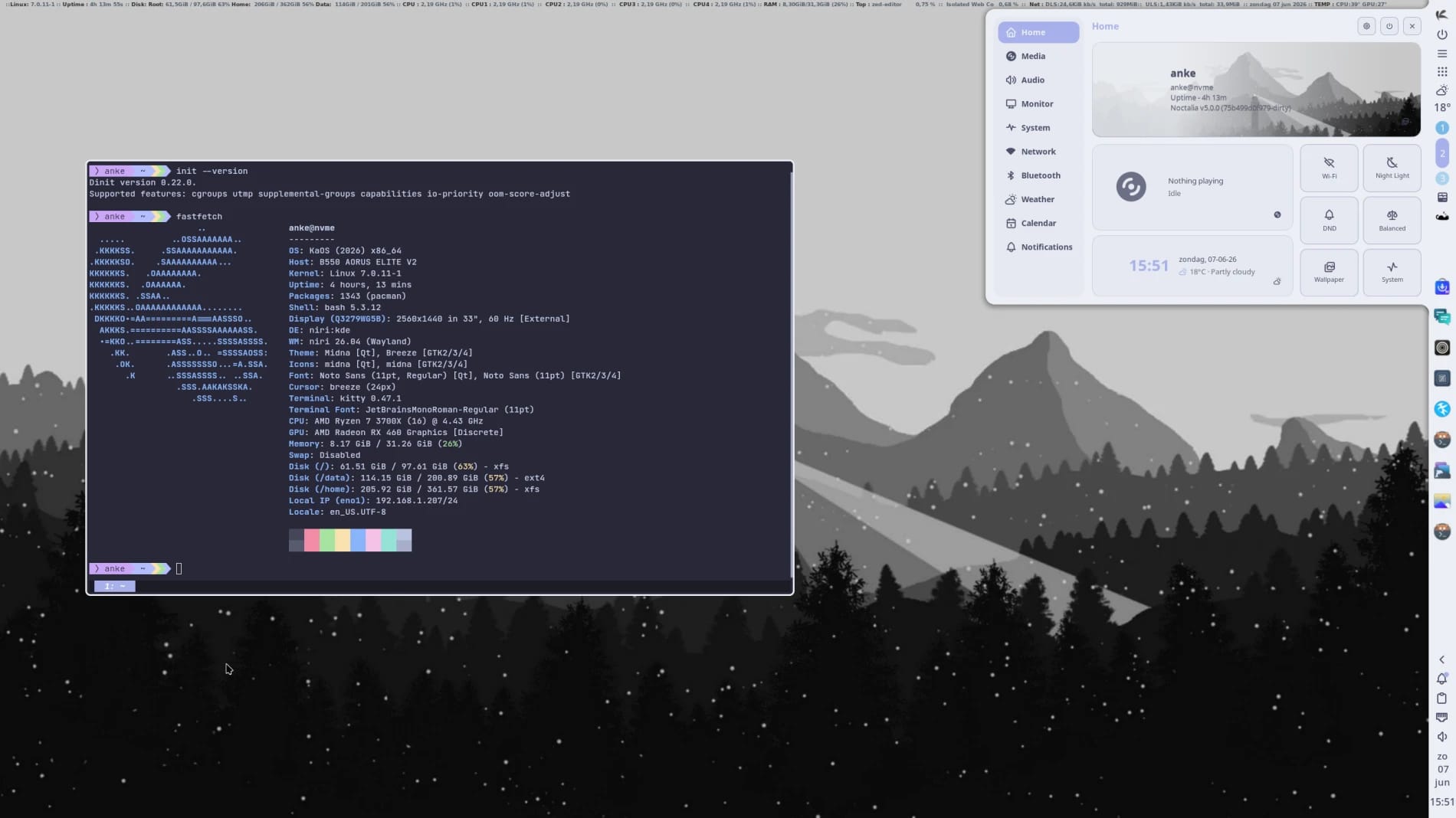
The KaOS Dinit 2026.06 RC image ships with a new startup stack where Dinit takes over as the init system and service manager, Turnstile handles session and login tracking, and seatd takes care of seat management. Together, these cover what systemd previously handled as a single unit.
Just so you understand what the fuss is about, Dinit (source code) is a lightweight, open source service manager that can also act as a system init. It handles starting services in parallel, respects dependencies between them, and is designed to work with other system components rather than replace them fully.
It already powers Chimera Linux and eweOS as the default init and is one of the init options available on Artix Linux and antiX.
That said, KaOS is not going fully systemd-free with this release. Systemd’s udev and tmpfiles stay in place for now, and elogind is still present. The devs plan to keep these components around for the forseeable future.
What else does the ISO offer?
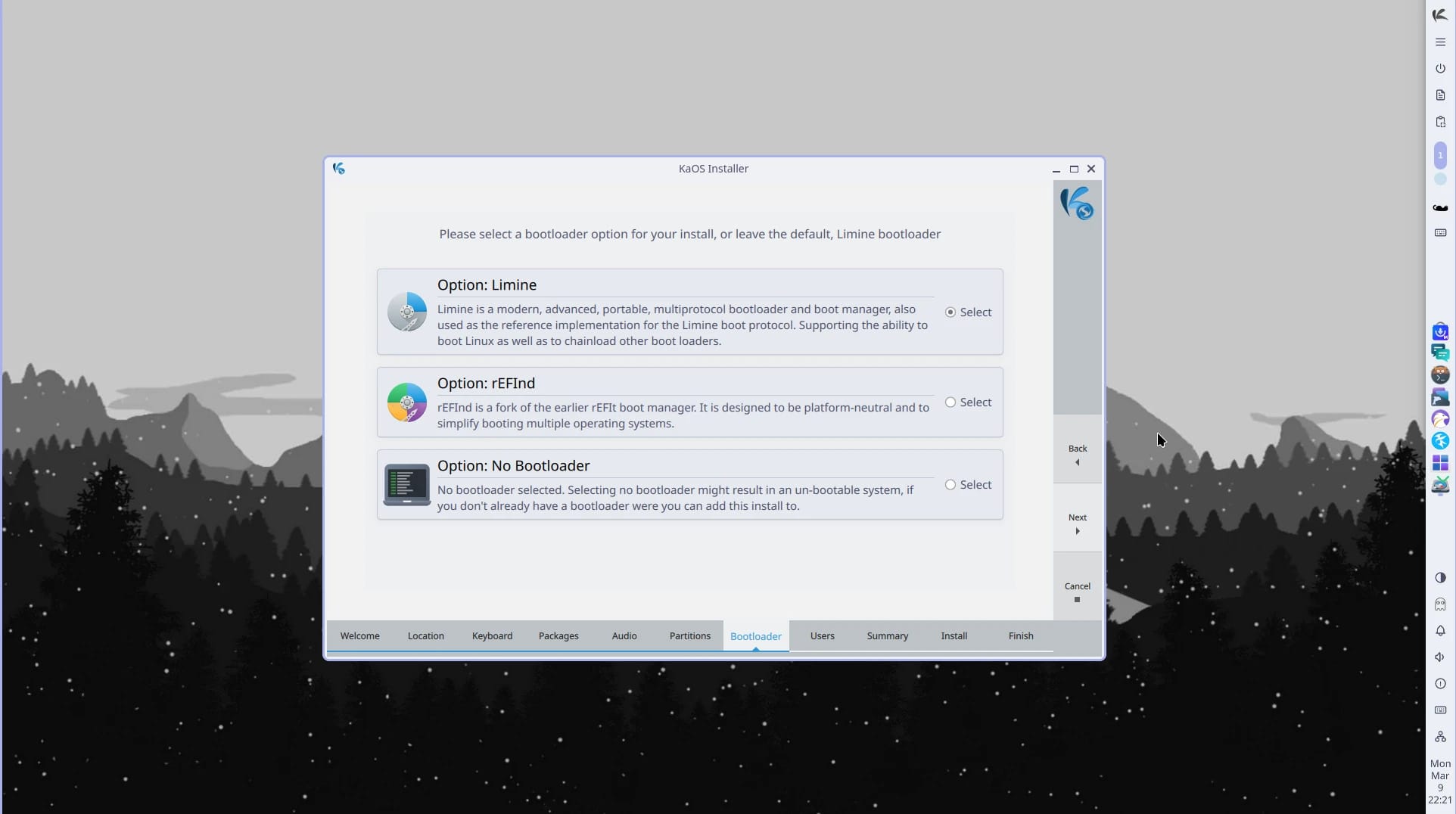
New bootloader
For the display manager, SDDM has been ditched in favor of greetd with tuigreet, which is said to integrate better with the new seatd-based session setup. The Calamares installer has also been updated to run cleanly on a pure Wayland session, with fixes applied to QML modules that had lost text input capability in areas like the user creation screen.
Likewise, Limine is now the default bootloader, with other UEFI options remaining available through the installer, and for partitioning, the automated setup in Calamares now covers most popular filesystems.
There’s also a new welcome utility, Croeso, which walks new users through around 15 common post-install settings after installation. And for the sound backend, phonon-mpv is now the default, replacing the previous VLC-based one.
Try the RC
This is a release candidate, not a stable release. Rough edges are expected, so it is best treated as a testing build rather than something for everyday use. The ISO is available for download from the KaOS RC portal via mirrors hosted across regions like France, U.S., and Japan.
Moreover, existing non-Dinit ISOs are still around and will be for sometime. The KaOS developers have not confirmed when or if these will be phased out.
